High-capacity data center interconnect (DCI) applications have driven a tremendous increase in coherent optical technology usage over previous generations. The introduction of 400G coherent pluggables for hyperscale applications began a shift of these DCI connections to move away from line system transponder terminations using performance-optimized coherent optics towards QSFP-DD and OSFP based coherent pluggable optics. While transponder-based deployments continue to make sense in some situations, an increasing number of new and upgraded DCI deployments, especially with reaches within the 1000 km range, have been rapidly adopting coherent pluggable optics that can be plugged directly into switches and routers. That continues today as hyperscalers not only increase DCI capacity from 400G to 800G per wavelength, but also ensure their networks can accommodate the rise in AI scale-across traffic to support their AI training/compute/applications beyond a single site due to power and space constraints. And while scale across refers to geographically extending the back-end GPU interconnect across data center sites, front-end network traffic across legacy DCI is also growing in support of scale across.
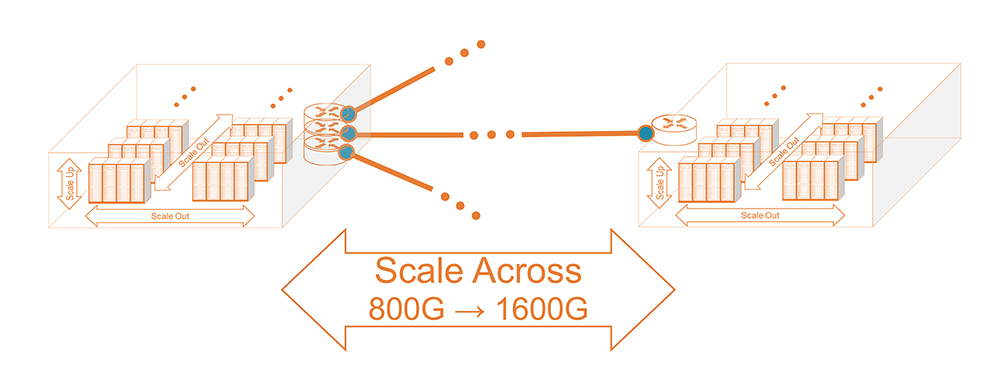 Figure 1. 800G deployments have begun; bandwidth growth pushes next-generation speed towards 1600G.
One of today’s challenges is the accelerated cadence of next-generation coherent pluggable module speeds due to AI infrastructure buildouts. Think of upgrading an engine on an airplane while in flight, making it faster without disruption. The required bandwidth for AI scale across has pushed hyperscalers to rapidly adopt 800G standards-based pluggables. Even before 800G modules began sampling, the OIF was already hard at work meeting with member companies to determine the next-generation 1600G requirements. Now hyperscalers have turned their attention towards how they plan to deploy 1600G coherent pluggable optics into their networks for DCI and AI scale across.
While the general implementation method to achieve baud rates to support the 400G and 800G generations were similar, the baud rates required for 1600G modules are driving investment in technologies that were not required in previous 400G and 800G generations. Coherent module suppliers are being challenged with making 1600G design decisions even while the OIF continues finalizing requirements. However, with each generation of coherent pluggable modules, technological barriers have been overcome.
Putting the Plus in ZR+
In general, for coherent pluggables, “ZR” refers to modules optimized for shorter data center links from campus paths (20 km) up to metro or standard data center interconnects (80 km to 120 km) with a focus on low power. “ZR+” modules are designed for extended long-haul and regional performance capable of greater than 1,000 km reaches using different techniques in the 400G, 800G, and 1600G generations as described here.
In the 400G coherent pluggable generation, the OIF 400ZR implementation used ~60Gbaud enabling 120 km DCI links. The availability of smaller CMOS node sized technology enabled the use of advanced forward error correction (FEC) coding to extend performance/reach capabilities beyond 400ZR—while maintaining an acceptable power consumption envelope—to create 400ZR+ (specifically OpenZR+).
In the 800G generation, a similar scenario occurred with 800ZR based on approximately double the 400ZR baud rate. And the advanced FEC used in the previous generation for ZR+ was folded into the ZR implementation. To achieve the higher performing 800ZR+ reaches, interoperable probabilistic constellation shaping (PCS) was included in the OIF implementation agreement. PCS provides a coherent transmission technique to improve OSNR performance, resulting in robust 800G ~1000 km long reach capabilities in a pluggable module.
For the 1600G generation, the design methodology for optical modulation had to evolve in order to achieve the required 240Gbaud modulation range. This was essential in order to achieve the shorter reach 1600ZR implementation. However, for 1600ZR+, a notable additional change was adopted.
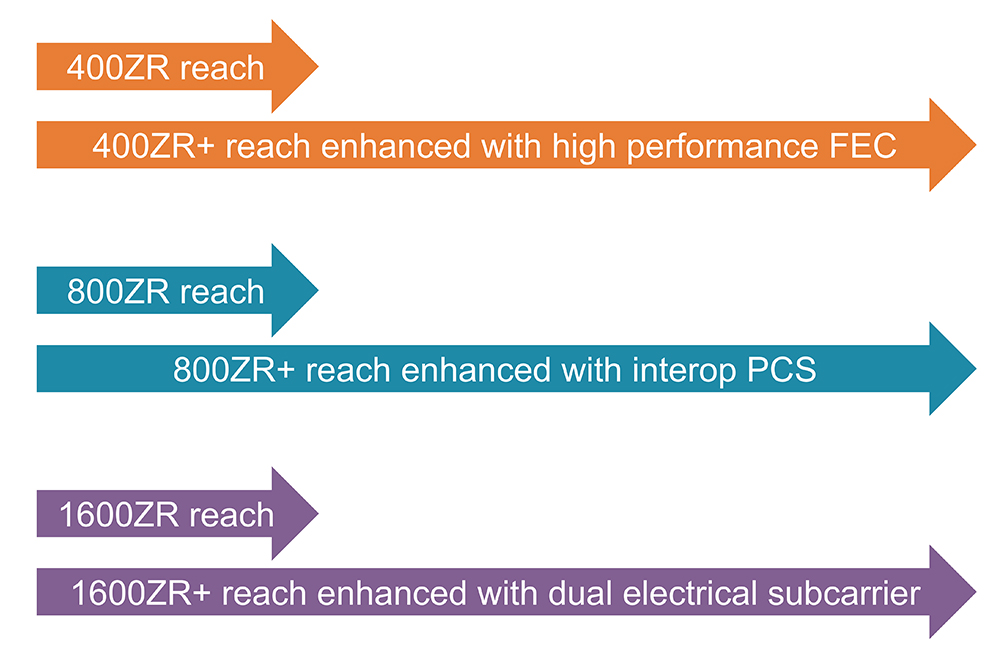 Figure 2. Coherent pluggable implementations of a DCI reach (ZR ~120 km) and a high-performance regional target reach (ZR+ >1000 km) for 400G, 800G, and 1600G generations.
Prior to the 1600G generation, coherent pluggable modules transmitted a single electrical carrier modulated signal on its single DWDM optical wavelength. And for the 1600ZR implementation, that remains the same. What is different for the 1600ZR+ implementation is that instead of a single electrical carrier modulated signal implementation, a dual electrical subcarrier modulation will be implemented. Dual electrical subcarrier modulation is one method used to combat the penalties due to equalization-enhanced phase noise (EEPN), which becomes an issue for regional 1600G transmission. EEPN has previously been an issue in lower speed ultra long haul coherent transmission, but as regional speeds increase to 1600G, EEPN will require mitigation for ZR+ reaches.
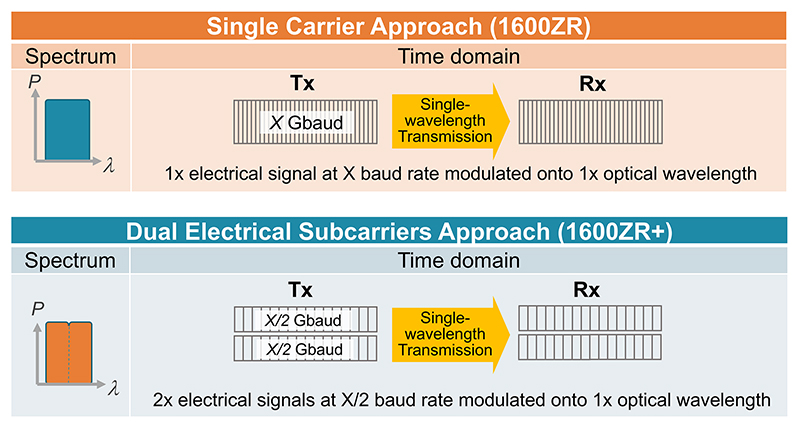 Figure 3. Comparison of the OIF 1600ZR and 1600ZR+ modulation approaches.
Aligning Market Timing with Standards Compliance
With 400ZR/ZR+ adoption now in a relatively mature state and the rapid adoption of 800ZR/ZR+ coherent modules continuing to increase, as evidenced by Acacia’s market leadership in volume shipments, it won’t be long before a similar migration to OIF 1600ZR/ZR+ occurs. Leveraging advanced high baud rate modulation designs and multiple generations of EEPN mitigation experience, Acacia has been actively participating in these OIF specifications while working closely with our customers. This helps ensure a successful rapid adoption rate, similar to the 400G and 800G coherent pluggable module generations, as a result of having the feature set and production ramp timing that customers require.
If you’d like to learn more about the 800G to 1600G evolution, contact Acacia to schedule a meeting.